Behind the Scenes of Preparing for an Art Fair in Amsterdam
How I select artworks, prepare prints, and design my booth for an Amsterdam art fair, plus the emotional and creative work that happens behind the scenes.
Preparing for an art fair, especially one in a vibrant hub like Rembrandtplein—is one of the most layered parts of being an artist. It’s a mix of creative decision-making, practical logistics, emotional readiness, and a deep desire to share your work with people who might connect with it.
If you’ve ever wondered what really goes on behind the scenes of an art fair, here is a closer look at my process.
Choosing the Artwork: Curating a Mini Exhibition
Every art fair begins long before I pack the first canvas. The most important decision is choosing which artworks to take with me. I think of each fair as a small temporary exhibition—an intimate snapshot of my current artistic world.
I begin by asking myself:
Which pieces feel alive right now?
Which paintings carry the emotional tone I’ve been exploring in the studio?
Which artworks represent the direction I want to grow in?
For me, this often includes calming landscapes, forest studies, or atmospheric pieces that feel like quiet, spiritual spaces. I want visitors to step into my booth and instantly understand the world I’m trying to create through colour, depth, and mood.
This artistic curation is intuitive and reflective. I lay the paintings out, look at them in daylight and lamplight, and pay attention to the pieces I keep returning to. These usually become the heart of the collection I bring to the fair.
Preparing Prints: Quality, Consistency, and Collector Experience
Once the originals are chosen, I move to preparing my print editions. Many collectors at art fairs discover artists for the first time, and prints offer an accessible way to take a piece home.
I focus on:
Colour accuracy compared to the original
Paper texture and archival quality
Consistent numbering and signing
Protective sleeves and backing boards
Clear labelling with sizes and pricing
There’s something important about holding each print, inspecting its details, and preparing it for someone else’s home. Prints require precision, but they also bring a sense of connection—each one is a small extension of the original painting’s spirit.
Pricing and Inventory: The Practical Side of Art Fairs
Art fairs teach you to balance creativity with clarity. Pricing is part of that balance.
Before each fair, I create a simple inventory sheet with:
Titles
Sizes
Mediums
Prices
Edition numbers
Quantities of each print size
I also prepare clear price cards for both originals and prints. Collectors appreciate transparency, and having a clean, readable setup makes conversations smoother.
This logistical work may not feel glamorous, but it is essential. A fair moves quickly; a well-prepared inventory keeps the day flowing with less stress.
Designing the Booth: Building a Temporary World
Your booth is your world for the day. It’s a visual conversation with every person who walks by.
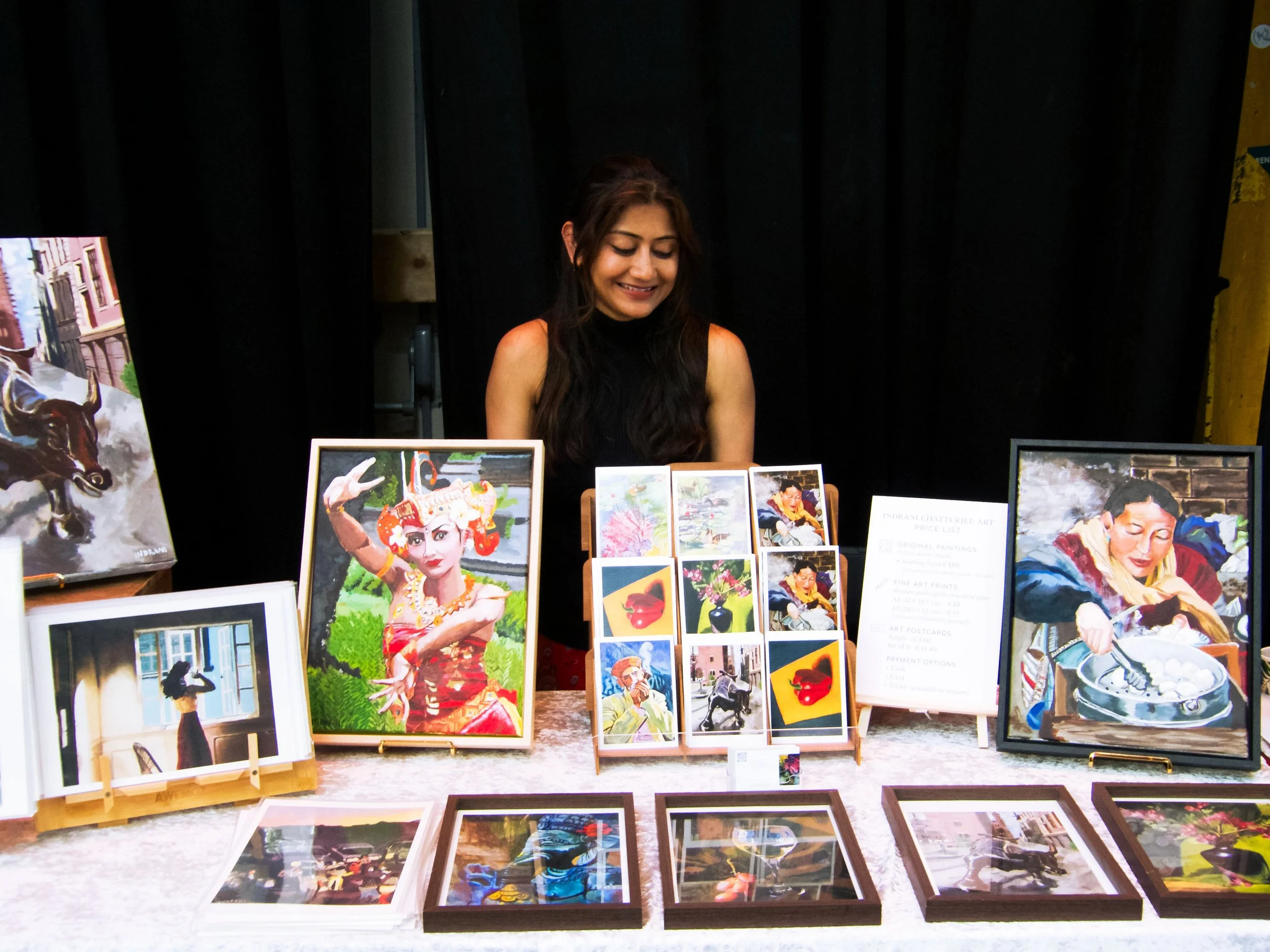
I sketch out different layouts and test arrangements on the floor of my studio before the fair. I think about rhythm—how the eye moves across the wall, where it rests, how the colours interact. A larger landscape might anchor one side, while smaller works create softness and approachability.
My booth setup usually includes:
A clear focal point piece
Featured works chosen to fit the theme I am going with (calming landscapes or memorable portraits)
A display area for prints and postcards
Business cards or a QR code for my website
The goal is simple: create a calm, inviting moment in the middle of a busy square.
I pack a toolkit that always saves the day—tape, clips, cloth, scissors, strings, wipes, gloves. Art fairs always have surprises, and having the right tools gives you confidence.
Preparing for Conversations with Collectors
One of the most rewarding aspects of an art fair is meeting the people who are drawn to your work. The conversations are never predictable—some linger for a moment, some turn into long, heartfelt exchanges, some result in a painting going home with someone who truly connects with it.
Before the fair, I spend some time reconnecting with the stories behind each piece. Not rehearsing, but remembering. When a collector asks, “What inspired this painting?” I want to answer honestly and with presence.
These interactions often stay with me long after the fair ends. They shape the themes I explore, the colours I choose, and the directions my next works take.
Emotional Preparation: Transitioning from Studio to Public Space
Sharing art publicly carries a certain vulnerability. In the studio, the world is quiet and covered. At a fair, it is exposed to strangers, opinions, curiosity, and judgment. It requires a shift in energy.
Before a fair, I protect small pockets of calm:
slow evenings
journaling
grounding practices
a nourishing meal
letting my mind settle
Each fair reminds me that vulnerability is part of being an artist. But so is connection. The possibility that someone might see a painting and feel something meaningful—that is the reason I show up.
The Morning of the Art Fair
Art fair mornings have their own kind of magic. I arrive early, before the crowds. Artists are unpacking; canvases are leaning against tables; coffee cups warm cold hands. The square slowly comes alive.
Unpacking is methodical:
Hang → Step back → Adjust → Rearrange → Breathe.
And then the moment arrives—people begin to wander in, pause, look closer, ask questions. My small world, built with intention, meets the wider world outside my studio.
Every fair teaches me something new:
Which colours pull people in
Which paintings create long pauses
What stories resonate
What collectors are searching for
How my work lives outside my own eyes
Preparing for an art fair is both art and strategy. It’s a blend of creativity, discipline, intuition, and hope.
Why I Love Art Fairs (Even When They’re Exhausting)
At their heart, art fairs are about connection. They offer a rare chance for emerging artists to share work in person, observe reactions, meet new collectors, and build relationships that last beyond the day.
There’s no algorithm—just real people, responding to real work, in real time.
And there’s something beautiful about that.
If You’d Like to Follow My Future Work…
I share behind-the-scenes happenings, new artworks, studio notes, and early access to releases through my mailing list.
👉 Subscribe here to stay connected and receive updates from my studio.
(It’s the best way to hear about new paintings, upcoming fairs, and evolving projects.)